by Roger Roots, J.D., Ph.D. April 8, 2026. A few days ago, on March 28, I tried to log onto Facebook only to be denied access unless I signed up to log in with a …
By Roger Roots, J.D., Ph.D. SHAME ON THE NEW YORK TIMES!!! On March 31, 2026 the NYT Editorial Board unleashed an opinion piece overloaded with smears against former January 6 defendants. This op-ed will go …
California’s explosive socialist government has been driving productive working entreprenuers away for years. Remember Elon Musk fled California years ago. Now California’s socialists are circulating a ballot petition to place a “one time” 5% “wealth …
Washington, D.C./Fairfax, VA. March 5, 2026. U.S. Federal employees are the most pampered and privileged members of American society. Statistically, federal “workers” make an average of two- to four-times what comparable workers make in the …
Feb. 26, 2026. United Kingdom. All those “dancing nurses” videos from March 2020 are being re-examined. Investigative journalist Jacqui Deevoy has been investigating the videos for years. The journalist has repeatedly asked nurses and doctors …
April 8, 2026. A few days ago, on March 28, I tried to log onto Facebook only to be denied access unless I signed up to log in with a biometric identifier.” I chose to opt out and enter without signing up for “strengthened security.” Then today, less than two weeks later, I read the post above on X, indicating that X is also launching biometric logins.
SHAME ON THE NEW YORK TIMES!!! On March 31, 2026 the NYT Editorial Board unleashed an opinion piece overloaded with smears against former January 6 defendants. This op-ed will go down as one of the most deceptive in history. NYT says “at least twelve” (of 1,500) J6ers have been “charged” with new crimes since being pardoned. This includes protest-related vandalism, a “brief detention” for scuffling with protestors at a press conference. violating a family court order and resisting arrest. That’s an arrest rate of EIGHT-TENTHS OF ONE % per year (actually 14 months) for J6ers.
But according to ChatGPT, around 2-3% of adults are arrested each year. And of course, all arrestees tend to be disproportionately male; almost FOUR PERCENT of adult MALES are arrested each year. Note that the “twelve” J6ers highlighted in the NYT essay are all males (and well over 90% of all pardoned J6ers are males.)
These stats are far more significant when one considers ex-convicts. About FOURTY-THREE PERCENT of released inmates are re-arrested for new crimes within the first year. HALF are re-arrested within 18 months!
This means that pardoned J6ers ARE FAR MORE LAW-ABIDING than the average American. Indeed the average American is something like FIVE TIMES MORE LIKELY than the average J6er to be arrested!!!!! And the average former prisoner is well over 53 TIMES MORE LIKELY to be arrested than the average pardoned J6er!!!
The 1,500 pardoned J6ers may be the most law-abiding cohort of the U.S. population. They are almost certainly the most law-abiding large cohort of former inmates ever released from the American criminal justice system.
California’s explosive socialist government has been driving productive working entreprenuers away for years. Remember Elon Musk fled California years ago.
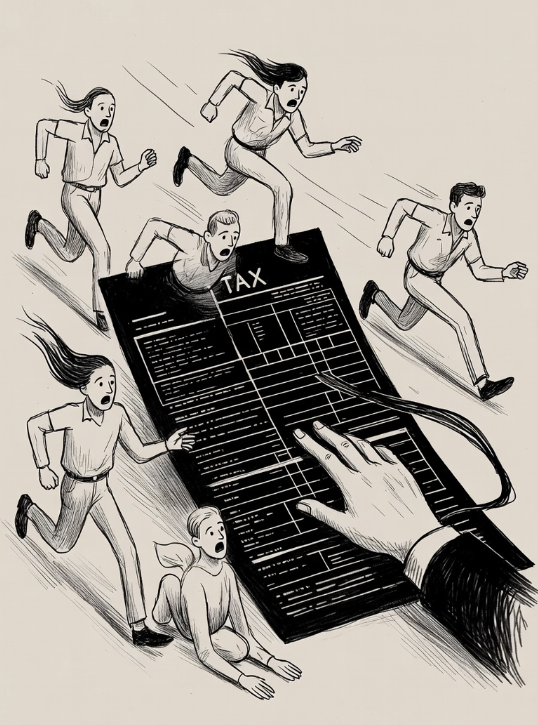
Now California’s socialists are circulating a ballot petition to place a “one time” 5% “wealth tax on every billionaire. Signatures are being gathered for the petition drive now. If the ballot initiative passes, it will purport to be RETROACTIVE–meaning it will take 5% of the wealth of every billionaire in California as of January 1, 2026.
Several California billionaires have packed their bags and relocated to other states.
Billionaire and Uber co-founder Travis Kalanick officially revealed he moved to Austin, Texas, just weeks before the proposed wealth tax could have targeted his estimated $3.6 billion fortune.
Steven Spielberg moved to New York.
Mark Zuckerberg (Meta/Facebook CEO) is rapidly buying Florida properties and making moves to avoid the tax.
Larry Ellison (Oracle co-founder/CEO)
David Sacks (venture capitalist, former PayPal/Yammer exec) fled to Texas.
Larry Page (Google co-founder) relocated to Florida.
Peter Thiel (venture capitalist, PayPal co-founder) has been openly discussing leaving California due to the anti-wealth climate.
Sergey Brin (Google co-founder) — Mentioned alongside Page in some accounts of tech titans relocating or considering it.
U.S. Federal employees are the most pampered and privileged members of American society. Statistically, federal “workers” make an average of two- to four-times what comparable workers make in the private sector. Federal employees live lives of decadence and luxury, with 8 PAID weeks of vacation annually, discounts, perks, and extravagant pensions. Many of them DIDN’T EVEN NEED TO REPORT to work in their offices for two years or more during the 2020-2024 COVID-19 scare.
Federal employees often view the private sector with contempt.
Now another US government “worker” has gone on rampage, killing an innocent woman on a freeway and stabbing three others. The government employee also killed his own dog during the episode. The employee, 32-year-old Jared Llamado of McLean, Virginia, was a Foreign Service Officer with the U.S. State Department. His career included assignments in Copenhagen, Denmark, after graduating with honors from George Mason University.
The rampage took place on Interstate 495 on Sunday afternoon, in Fairfax County, Virginia, near the Little River Turnpike exit. A Virginia State trooper finally dispatched the raging State Department officer on the side of the highway.
Feb. 26, 2026. United Kingdom. All those “dancing nurses” videos from March 2020 are being re-examined. Investigative journalist Jacqui Deevoy has been investigating the videos for years. The journalist has repeatedly asked nurses and doctors if they participated in the videos or know anyone who did participate. It seems that no British nurses seem to be able to identify any of their coworkers who participated.
On Deevoy’s X thread, commentators report that a handful of the videos were uploaded to TikTok by legit nurse groups in the weeks AFTER the initial barrage of dancing nurse videos. Other commentators recall reading online ads seeking actors/dancers who looked like amateurs prior to 2020. Still others recall vans pulling up with ‘nurses,’ directors and stage lights–from out-of-town. Almost no one recognizes anyone in the videos. And many of the videos appear to have some professional videography (including tracking cameras and even drones filming from above).
This begs the question: How did all those dozens of dancing-nurses videos get produced? And when?
Feb. 14, 2026. Big Oil companies, such as ExxonMobil, Shell, Chevron, BP, Occidental Petroleum, and others, have spent over HUNDRED BILLION DOLLARS in under a decade on bogus “environmental programs, carbon capture and storage (CCUS), low-carbon fuels, renewables, and related initiatives.” This is more than the annual budgets of most states.
These vast dollar amounts are being spent to appease the left; so that Big Oil can claim it “believes” in the catastrophic-climate-change-by-manmade-CO2 religion and is “doing something” to ‘lower carbon emissions.’
Needless to say, this dollar amount vastly eclipses–on a scale of perhaps tens of thousand-to-one–any amounts spent by fossil fuel companies (decades ago) to support “skeptical” climate science.
Note that numerous academics have built successful careers–and won the highest awards in academia–for promoting the notion that fossil fuel companies are secretly funding skeptical science; or even that skepticism of the government’s doomsday-climate claims is wholly funded by fossil fuel companies. The New York Attorney General’s office spent millions, and forced Exxon and Mobil to produce millions of documents in 2018 to try to build a case that ExxonMobil had hidden evidence of catastrophic-climate-change-by-CO2 from the world. The New York Supreme Court found the claim meritless.
Any shareholder of these corporations has grounds to file a shareholder derivative suit for squandering corporate funds. Fossil fuel companies are now the second-biggest funder (behind only governments) of the government climate doomsday theory. In fact fossil fuel companies are now the biggest funders of the COP meetings and other “environmentalist” propaganda festivals.
In fact, shareholders of these companies should sue the companies FOR FAILING TO fund skeptical research or push back on the CO2 doomsday propaganda agenda.
Oil and Gas Climate Initiative (OGCI), a consortium of 12 major oil companies (including Aramco, BP, Chevron, CNPC, Eni, Equinor, ExxonMobil, Occidental, Petrobras, Repsol, Shell, and TotalEnergies) has focused on “emissions reductions and low-carbon technologies.” Since 2017, they’ve collectively invested around $125 billion in areas like “renewables,” biofuels, hydrogen, and CCUS. In 2023 alone, this group spent a record $29.7 billion on such initiatives, with over half going to “renewables” and a growing portion to CCUS hubs. Specific projects include Eni’s Ravenna CCS hub in Italy (which began injecting CO₂ in 2023) and the Northern Lights facility in Norway (a joint venture by Equinor, Shell, and TotalEnergies for offshore CO₂ storage).
As of 2025, NONE of these “carbon capture” projects have actually captured more carbon dioxide from the atmosphere than the amount of carbon dioxide the projects released into the atmosphere to build them. (The same appears to be true regarding “biofuels” which convert corn and other grains into fuel.)
ExxonMobil is pursuing up to $30 billion in lower-emissions “investments” from 2025 through 2030, with about 65% aimed at helping other companies reduce their emissions through technologies like CCUS.
ExxonMobil launched its Low Carbon Solutions business in 2021, initially committing $3 billion over five years, and has captured over 120 million tonnes of CO₂ to date. Key projects include a proposed $100 billion Houston-area CCUS facility to remove 50 million tons of CO₂ annually from industrial sources, as well as “investments” in biofuels, algae-based fuels, and direct air capture (DAC) technologies.
Shell allocated $10-15 billion for low-carbon solutions between 2023 and 2025, emphasizing hydrogen, renewables, and clean tech. This includes investments in offshore wind, electric vehicle charging, and CCUS projects like the Northern Lights initiative. The company has also reduced its operational emissions through methane detection and flaring reductions as part of broader OGCI commitments.
Chevron has “invested” heavily in CCUS startups and projects, including leading a $45 million funding round for Ion Clean Energy (a carbon capture solvent developer) and acquiring a 50% stake in the Bayou Bend CCS project near Houston. Additional “investments” include Carbon Clean Solutions and Svante (carbon capture tech firms), as well as ventures in lithium and graphite for EV batteries. Chevron’s total low-carbon spending is part of broader industry trends, with acquisitions and R&D in clean tech.
Occidental Petroleum (Oxy) is now presenting itself as a leader in CCUS and enhanced oil recovery using captured CO₂. It has “invested” in startups like Carbon Engineering (for DAC tech), Cemvita (biotech for low-carbon fuels), Carbon Upcycling, and LanzaTech (carbon reuse). The company is building the world’s first large-scale DAC facility and has committed to carbon finance labs for emissions offsets.
BP “invested” $1.6 billion in low-carbon energy in 2024 (including renewables, biofuels, hydrogen, and CCUS), though it has scaled back some targets to focus more on oil and gas.
Globally, the oil and gas industry “invested” about $30 billion in clean energy in 2023, which accounts for roughly 4% of its total capital expenditures (capex). For the major oil companies, low-carbon investments typically range from 3-12% of annual capex, translating to $10-30 billion per year across the top firms.
The pro-government screed actually laid off almost half its workforce.
Washington, D.C. Feb. 10, 2026.
Last week, we reported that one of America’s most pro-government extremist newspapers, the Washington Post, had fired or laid off one-third of its workforce. The “news”paper loses more than a hundred million dollars annually spewing a steady stream of big-government, deep-state lies and propaganda.
Now, there is information that the Post actually shed FORTY-EIGHT PERCENT of its staff, including more than half of the Post’s “climate change reporters.”
“[T]he extent of the damage is actually greater than first reported . . . . an accounting by the Washington-Baltimore Newspaper Guild, the union that represents Post journalists, finds that the paper’s management eliminated closer to half of the journalists it used to employ.”
“According to guild steward Sarah Kaplan, a Post climate reporter, the paper is dropping between 350 and 375 journalists. With the newsroom’s pre-layoff strength at 790 people, that means between 44 percent and 47.5 percent of the newsroom has been axed…”
The public craves news and the convenience of around-the-clock information. But CNN has lost TWO-THIRDS of its viewers since 2016. People just won’t tune into pro-government propaganda and Democratic Party talking points.
The Gateway Pundit has collected numerous comments about the network’s loss of trust and credibility.
Washington, D.C., Feb. 4, 2026. In what can only be described as a great day for integrity in journalism, the Washington Post has announced that one-third of its staff is being laid off. People just won’t pay for pro-government propaganda. It may be that secret government support for the “newspaper” has been cut or temporarily stayed.
The Post was once considered one of America’s finest newspapers. But years as a government mouthpiece has cost the Post millions of dollars annually. See here.
D.C. January 28, 2026. The Washington Post’s endless stream of pro-government extremist content has caused the institution to lose thousands of readers along with credibility. The Post has been “bleeding cash,” possibly hundreds of millions of dollars annually in recent years. Readers simply won’t pay to read government and Democratic Party talking points.
Now the Post is notifying staff that as many as 300 more jobs are on the chopping block. Owner Jeff Bezos is trying to save the “newspaper” by switching its focus to “free markets” and personal liberties. Bezos’ tweet post sent mainstream “journalists” into fits of rage.